Coin marketcap Is a Practical Guide to Crypto Prices, Charts and Market Data
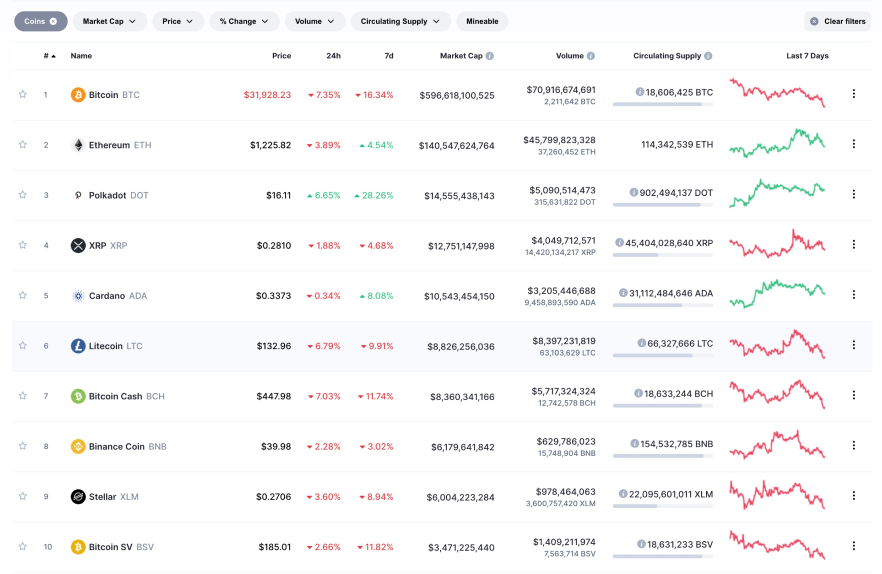
Coin marketcap Is a way to read the crypto market through prices, charts, rankings, market capitalization, circulating supply, volume, and historical performance. It helps users compare Bitcoin, Ethereum, stablecoins, DeFi tokens, meme coins, and newer digital assets in one research workflow. The important point is that Coin marketcap should be used as a data starting point, not as proof that an asset is safe, fairly valued, or likely to rise.
Coin marketcap matters because cryptocurrency markets move quickly and are fragmented across centralized exchanges, decentralized exchanges, wallets, blockchains, and token communities. A user searching for Coin marketcap is usually trying to answer a practical question: what is this coin worth, how actively is it traded, how large is the market, and how does it compare with other assets? Those answers are useful, but they need context, especially when low-liquidity tokens can show dramatic short-term moves.
What is Coin marketcap?
Coin marketcap is commonly used to describe a crypto market data experience where digital assets are ranked by market capitalization and displayed with price, supply, volume, percentage change, and chart history. In plain terms, Coin marketcap turns scattered trading data into a comparison page. It gives users a faster way to understand whether an asset is a major network, an emerging project, a stablecoin, a DeFi token, or a highly speculative microcap.
Coin marketcap also reflects a broader habit in crypto research. People often check rankings before reading a project website, opening a block explorer, reviewing a white paper, or looking at exchange order books. That order is understandable because ranking pages are easy to scan. Still, the ranking alone cannot explain token design, wallet concentration, contract risk, governance quality, bridge exposure, or whether reported trading activity is meaningful.
For a new user, Coin marketcap can feel like a scoreboard. Bitcoin and Ethereum may sit near the top, stablecoins may show large market values, and smaller tokens may move up or down quickly. The better way to treat the page is as a map. It shows where to look next, which questions to ask, and which figures need verification before any money is placed at risk.
How does Coin marketcap calculate crypto market value?
Coin marketcap usually centers on market capitalization, a figure calculated by multiplying a token price by its circulating supply. If a token trades at one dollar and has ten million circulating tokens, its market cap is ten million dollars. This simple formula is useful for comparison, but Coin marketcap data can become misleading if the supply figure is unclear, outdated, self-reported, locked, bridged, or spread across multiple networks.
Coin marketcap price data is typically shaped by trading pairs. A coin may trade against USD, USDT, USDC, BTC, ETH, BNB, or another quote asset. When several exchanges list the same asset, a market data page may aggregate prices across venues. In practice, the quality of the result depends on liquidity, spreads, exchange reliability, and whether unusual trades are filtered or weighted appropriately.
Coin marketcap volume is another important number, but it should not be read in isolation. High volume may indicate real interest, active market making, exchange incentives, or temporary speculation. Low volume may indicate a quiet asset, a new listing, a thin market, or a token that is difficult to sell without moving price. This is why Coin marketcap research works best when price, volume, liquidity, supply, and chart behavior are read together.
Why do people use Coin marketcap before researching a coin?
Coin marketcap gives users a quick first pass before they spend time on deeper due diligence. It is useful when comparing large-cap assets, tracking a watchlist, checking whether a token has meaningful exchange coverage, or seeing how a category such as layer 1 blockchains, gaming tokens, real-world asset tokens, AI-related tokens, or decentralized finance is performing.
Coin marketcap is also helpful when separating a headline from the underlying numbers. A token may be described as early, trending, newly listed, or up sharply over seven days. The data view lets a user ask whether the move happened on serious volume, whether the market cap is tiny, whether supply is expanding, and whether the chart has enough history to mean anything. Those checks do not remove risk, but they reduce blind decision-making.
In practice, users often rely on Coin marketcap for several routine tasks:
- Checking current crypto prices and short-term percentage changes.
- Comparing market capitalization across similar digital assets.
- Reviewing 24-hour volume, liquidity, and exchange availability.
- Watching Bitcoin dominance, stablecoin movement, and sector rotation.
- Building a watchlist before reading official project materials.
Coin marketcap can support these tasks because it collects the visible market layer. It does not replace official documentation, contract review, audit reports, exchange notices, governance forums, or direct on-chain verification.
How should beginners read Coin marketcap charts?
Coin marketcap charts should be read from broad context to narrow detail. Start with the time frame. A token that is up 100 percent in one day may still be down heavily over a year. A coin that looks flat on a short chart may have a long record of volatility. Switching between daily, weekly, monthly, and yearly views helps prevent a single candle from driving the entire interpretation.
Coin marketcap chart reading also depends on volume. A price jump with rising volume is different from a price jump on almost no activity. Thin markets can move sharply because a small number of trades may change the displayed price. For small tokens, always look for liquidity depth, the number of active markets, and whether trading is concentrated on one exchange or one decentralized pool.
Coin marketcap rank changes are easy to overread. A project can move up the rankings because its price increased, its supply was updated, another asset fell, or market conditions changed. Rank is a useful sorting tool, not a fundamental valuation model. Serious analysis still requires tokenomics, unlock schedules, developer activity, community quality, revenue assumptions, regulatory exposure, and technical risk.

What is a practical Coin marketcap research workflow?
Coin marketcap works best when used as the first layer of a repeatable workflow. Begin with the asset page, confirm the name, ticker, network, contract address if relevant, and exchange listings. Then compare price performance across time frames and check whether volume supports the move. If the asset is a token rather than a native coin, move next to the relevant block explorer and verify the contract directly from official project channels.
Coin marketcap research should then move from market data to project substance. Read the official website, docs, token allocation, emission schedule, governance process, security disclosures, and any audit materials. For DeFi projects, review total value locked, protocol dependencies, admin keys, oracle design, and bridge exposure. For proof-of-work coins, look at hash rate, mining distribution, merged mining claims, block rewards, and network history.
Coin marketcap can be paired with a simple step-by-step routine:
- Confirm the exact asset, ticker, network, and official contract details.
- Compare market cap, fully diluted valuation, circulating supply, and unlock risk.
- Check volume, liquidity, exchange concentration, and price history.
- Read official documents and verify claims against on-chain data when possible.
- Decide whether the asset belongs on a watchlist before considering any trade.
Coin marketcap should not be the last stop in that process. The most useful habit is to treat every attractive data point as a question. If a coin claims strong growth, ask where the demand is coming from. If it shows a large supply burn, verify the transaction. If it advertises listings, check the official exchange pages or project channels.
What are the benefits and limits of Coin marketcap data?
Coin marketcap is valuable because it compresses many signals into a readable format. Prices, rankings, charts, exchange pairs, market cap, and volume can be scanned quickly. That saves time for traders, researchers, journalists, builders, and casual users who want to understand the crypto market without opening dozens of separate exchange tabs.
Coin marketcap also makes comparison easier. A user can look at Bitcoin beside Ethereum, stablecoins beside payment tokens, and DeFi governance tokens beside infrastructure networks. That context helps prevent isolated thinking. A token that sounds enormous in a social post may still be tiny compared with established networks, while a large market cap may reveal that much of the expected growth is already priced into the asset.
| Data point | What it helps explain | What to verify separately |
|---|---|---|
| Market cap | Relative size of a crypto asset | Circulating supply and locked supply |
| Volume | Recent trading activity | Liquidity depth and exchange quality |
| Chart history | Past price behavior | News, unlocks, and market structure |
| Listings | Where an asset may trade | Official exchange and contract details |
Coin marketcap has limits because market data is not the same as safety. A token may appear on a tracking site and still have weak liquidity, poor disclosures, concentrated ownership, unaudited contracts, aggressive marketing, or governance problems. A listing can increase visibility, but visibility is not endorsement, insurance, or a guarantee of future performance.
Is Coin marketcap safe to use for investment decisions?
Coin marketcap is safe to use as an informational tool when users understand what it can and cannot prove. It can help organize public market data, but it cannot determine whether a project is legitimate, whether a token contract is safe, or whether a price is fair. Crypto assets are volatile, and some projects fail because of fraud, code bugs, poor liquidity, weak demand, regulatory issues, or simple market cycles.
Coin marketcap users should be especially careful with very new tokens, meme coins, low market cap assets, and projects promoted with urgent language. Claims about audits, doxxed teams, locked liquidity, charitable donations, no premine, merged mining, or future exchange listings should be verified with official sources and on-chain records. Even when a claim is true, it may not remove price risk or execution risk.
Coin marketcap data should never be treated as financial advice. Before acting, users should consider their risk tolerance, time horizon, liquidity needs, tax situation, and the possibility of losing the full amount committed to a speculative token. Official project channels, block explorers, exchange pages, security reports, and independent research all matter when evaluating crypto.
How does Coin marketcap compare with other crypto data tools?
Coin marketcap is part of a larger research stack. Other tools may focus on decentralized exchange pools, on-chain analytics, NFT markets, portfolio tracking, developer activity, stablecoin flows, derivatives funding rates, liquidation data, or protocol revenue. No single dashboard can answer every question because crypto activity happens across many chains and market venues.
Coin marketcap is strongest as a broad market directory and comparison layer. A block explorer is stronger for contract details, holder distribution, and transaction history. A decentralized exchange analytics page is stronger for pool liquidity and recent swaps. A portfolio tracker is better for personal balances. A research report may be better for sector-level interpretation, such as tokenized treasury growth, DeFi lending trends, or exchange volume patterns.
Coin marketcap therefore fits near the beginning of the research process. It helps identify assets, categories, and market movement, then points users toward deeper sources. A disciplined user may start with Coin marketcap, verify the project website, check the contract in a block explorer, review exchange liquidity, and then decide whether the asset deserves more attention.
How can Coin marketcap help without encouraging hype?
Coin marketcap can reduce hype when users focus on evidence rather than slogans. Market cap, supply, liquidity, and chart history can expose whether a project is actually large, actively traded, or merely loud. The same data can also show when enthusiasm has already pushed a token far beyond its previous range. Good research asks what the numbers support and what they leave unanswered.
Coin marketcap should be used with patience. Instead of reacting to a sudden gain, add the asset to a watchlist, observe whether volume remains healthy, read the official materials, and compare it with similar projects. This slower workflow is especially useful when a coin is promoted around future listings, giveaways, staking rewards, burns, or ambitious roadmaps. Those details may be relevant, but they should be verified rather than accepted at face value.
Coin marketcap is most useful when it helps users become better question askers. What is the real circulating supply? Where is the liquidity? Who controls the contract? Are there unlocks coming? Is trading concentrated? Does the project solve a clear problem? Are official links consistent across sources? The answers may support further research, or they may show that caution is the better decision.
What should users remember before relying on Coin marketcap?
Coin marketcap is a helpful doorway into crypto market data, not a complete decision system. It can make the market easier to scan, compare, and understand, but it cannot eliminate the risks that come with digital assets. The best use of Coin marketcap is to combine price data with verification, official sources, security checks, and independent judgment.
Coin marketcap also rewards context. A large market cap, a low price per token, a sharp chart move, or a new exchange listing can all be misunderstood without supply, liquidity, and project history. When users slow down and read the numbers together, Coin marketcap becomes more than a ranking page. It becomes a practical research tool for navigating a market where speed, volatility, and promotion often compete with careful analysis.
Questions and Answers
What is Coin marketcap used for in crypto research?
Coin marketcap is used to compare cryptocurrency prices, market capitalization, volume, supply, rankings, and chart history. It helps users get a quick view of Bitcoin, Ethereum, stablecoins, DeFi tokens, and smaller assets. It should be treated as a research starting point, not as proof that a coin is safe, fairly valued, or suitable for any particular person.
How is market cap calculated on a Coin marketcap style page?
Market cap is generally calculated by multiplying a coin or token price by its circulating supply. The result helps compare the relative size of different crypto assets. Users should still verify the supply figure because locked tokens, bridged assets, self-reported data, and upcoming unlocks can change how meaningful the market cap number is.
Can Coin marketcap show whether a crypto project is legitimate?
Coin marketcap can show useful market data, but it cannot prove that a project is legitimate. A listed token may still have weak liquidity, concentrated ownership, unaudited code, misleading marketing, or risky tokenomics. Users should verify official links, contract addresses, exchange listings, audits, governance details, and on-chain records before relying on any project claims.
Why can low market cap coins move so much on Coin marketcap charts?
Low market cap coins often have thinner liquidity, fewer markets, and smaller order books. That means a relatively small amount of buying or selling can create large percentage changes on a chart. A sharp move may reflect genuine demand, but it may also reflect temporary speculation, low volume, or limited ability to exit without affecting price.
What should beginners check first on Coin marketcap?
Beginners should start with the asset name, ticker, network, market cap, circulating supply, volume, chart history, and exchange availability. If the asset is a token, they should verify the contract address through official project sources and a block explorer. After that, they can read tokenomics, security materials, governance details, and liquidity information.
Is Coin marketcap financial advice?
No. Coin marketcap is best understood as an informational market data tool. It can help users organize and compare crypto information, but it does not decide whether an asset should be bought, sold, or held. Crypto assets are volatile and can lose significant value, so users should verify details and consider personal risk before acting.
How does Coin marketcap compare with block explorers and exchange pages?
Coin marketcap is useful for broad price, ranking, and market comparison. Block explorers are better for checking contracts, holders, transactions, and token movements. Exchange pages are better for confirming active markets, order books, and trading rules. A careful crypto workflow often uses all three because each source answers a different part of the research question.