Coin marketcap Is a guide to crypto rankings, prices and charts
Coin marketcap Is a way to read cryptocurrency prices, market capitalization, trading volume, supply data and charts in one place before making your own decisions. It helps users compare Bitcoin, Ethereum, stablecoins, DeFi tokens, meme coins and newer altcoins by showing how each asset is ranked and how its market data changes over time. Coin marketcap should be treated as research infrastructure, not as financial advice or a guarantee of future performance.
Coin marketcap matters because crypto markets move quickly and can be difficult to understand from a single price alone. A token can look cheap because it trades at a fraction of a dollar, yet still have a large valuation if its circulating supply is huge. Another asset can have a high price per coin but a smaller total market value. Coin marketcap gives readers the context needed to separate price, popularity, liquidity and risk.
What is Coin marketcap?
Coin marketcap is commonly used as a shorthand for crypto market data pages that rank digital assets by market capitalization. The phrase is closely associated with the idea of checking coin prices, charts, exchange listings, token supply, historical performance and market categories. Coin marketcap can help a beginner understand the difference between a coin, a token, a blockchain network and an exchange-traded market pair.
Coin marketcap is not an exchange by itself in this educational sense. It is better understood as a research and comparison layer. Users may look up a cryptocurrency, review its basic profile, check where it is traded, read recent market information and compare it with other assets. Coin marketcap pages often include data for Bitcoin, Ethereum, Solana, XRP, Cardano, Dogecoin, stablecoins and thousands of smaller projects.
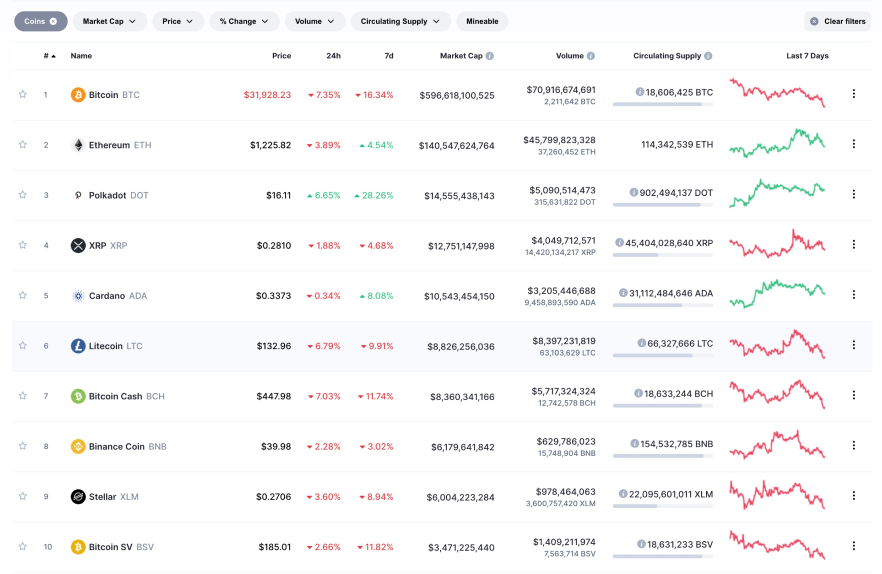
The most important idea is that Coin marketcap organizes market signals. Those signals include market capitalization, fully diluted valuation, 24-hour volume, circulating supply, maximum supply, price change over different time frames and market dominance. None of those signals proves that an asset is safe, valuable or suitable for a specific person. They are inputs for research, not substitutes for judgment.
How does Coin marketcap calculate market rankings?
Coin marketcap rankings usually start with market capitalization, which is the current price multiplied by circulating supply. If a token trades at 2 dollars and has 100 million circulating tokens, its market capitalization would be 200 million dollars. This number gives a rough comparison of asset size, although it depends heavily on accurate supply data and reliable pricing across markets.
Coin marketcap also uses trading volume to show how active a market has been over a recent period, often the last 24 hours. Volume helps readers judge whether a price move has broad participation or only thin activity. A large percentage gain on low volume can be fragile. A smaller move on deep volume may be more meaningful, but it still does not predict what happens next.
Coin marketcap price charts typically aggregate data from multiple trading pairs and exchanges. In practice, the same token may trade at slightly different prices on different venues because of liquidity, fees, regional access and order book depth. Coin marketcap attempts to present a readable reference price, but users should still verify the exact quote on the exchange or wallet they plan to use.
Coin marketcap categories add another layer of context. Instead of comparing every asset against every other asset, a reader can focus on sectors such as layer 1 networks, layer 2 scaling projects, DeFi protocols, gaming tokens, artificial intelligence tokens, real-world asset projects, stablecoins or meme coins. Categories can be useful for discovery, but category popularity can also encourage hype-driven decisions.
How should beginners read Coin marketcap data?
Coin marketcap is easiest to read when the user starts with a single asset page and moves from basic numbers to deeper checks. The price is only the first number. A careful reader also checks market capitalization, volume, circulating supply, total supply, maximum supply if available, historical chart behavior and the exchanges where the asset is listed.
For a new user, Coin marketcap can answer simple questions quickly. Is this asset widely traded? Has volume increased or decreased recently? Is most of the supply already circulating, or could many more tokens enter the market later? Does the project have an official website, explorer, white paper, community channels and verified contract information? Coin marketcap can point toward those questions, but users should confirm important details directly with official project sources.
Coin marketcap charts are useful for orientation, especially when switching between daily, weekly, monthly and yearly views. A one-day move can look dramatic while the longer chart shows a wider downtrend. A yearly chart can show whether a token is near previous highs, recovering from a drawdown or moving in a narrow range. Coin marketcap helps users avoid judging a project from a single snapshot.
Coin marketcap can also support simple comparison habits. A reader might compare Bitcoin dominance, Ethereum activity, stablecoin market size and altcoin sector performance before looking at smaller assets. Internal research pages such as and can help users keep related topics organized while learning the market vocabulary.
What can Coin marketcap be used for day to day?
Coin marketcap is often used as a daily dashboard for people who want a quick view of the crypto market without opening several exchanges. A user can check major coin prices, trending assets, recently listed tokens, sector rankings, gainers and losers, exchange activity and general market sentiment. This kind of dashboard is helpful for awareness, but it should not create pressure to trade frequently.
Coin marketcap is also useful for building a watchlist. A watchlist lets a user follow a set of assets without buying them. That is especially helpful in volatile markets, where curiosity can turn into impulsive decisions. Watching price, volume and news flow over time gives a more realistic view than reacting to one social media post or one sudden chart move.
Coin marketcap can support several practical workflows:
- Checking the market capitalization before comparing two tokens.
- Reviewing 24-hour volume to understand recent trading activity.
- Confirming the correct token contract before interacting with a wallet.
- Finding which exchanges list a specific cryptocurrency.
- Comparing sector categories such as DeFi, gaming or layer 2 networks.
- Studying historical chart ranges before forming a research view.
Coin marketcap is particularly useful when evaluating whether an asset is liquid enough to research further. Liquidity means there are enough buyers and sellers for trades to occur without extreme price movement. Thin liquidity can make a chart look misleading. Coin marketcap volume and exchange listings are not perfect measures, but they help users see whether a market has meaningful activity.

How do you research a token with Coin marketcap step by step?
Coin marketcap research works best when the user follows a repeatable process. The first step is to search for the asset by name or ticker and confirm that the page matches the intended project. Many tokens have similar names, copied branding or confusing ticker symbols. Coin marketcap can reduce that confusion when the asset page includes official links, network details and contract addresses.
- Start with the asset name, ticker, network and official project links.
- Review price, market capitalization, 24-hour volume and supply figures.
- Open the chart across several time frames, not just one day.
- Check exchange listings and compare liquidity across trading pairs.
- Read the project description, then verify claims through official sources.
- Look for risk signals such as low volume, unclear supply or inactive channels.
Coin marketcap can then be used to compare the token with similar projects. A DeFi token should be compared with other DeFi protocols, not only with Bitcoin. A gaming token should be checked against other gaming ecosystems. A stablecoin should be reviewed through a different lens, including reserve transparency and redemption mechanics. Coin marketcap provides the starting structure, while deeper due diligence depends on the asset type.
In practice, Coin marketcap should be one tab in a broader research process. Users may also check block explorers, official documentation, governance forums, exchange announcements, audit reports and wallet warnings. Crypto assets can involve smart contract bugs, bridge failures, insider allocations, liquidity shocks and regulatory uncertainty. Coin marketcap can surface data, but it cannot remove those risks.
What are the main benefits of Coin marketcap?
Coin marketcap has a clear benefit: it turns a fragmented market into a more readable set of rankings, charts and asset profiles. Crypto trades across many exchanges, blockchains and regions. Without a market data page, users would need to gather prices and volume from many separate sources. Coin marketcap brings those signals into a format that is easier to scan.
Coin marketcap also helps users build market literacy. Terms such as circulating supply, fully diluted valuation, dominance, liquidity, market pair, contract address and exchange volume become easier to understand when seen next to real assets. This is valuable for beginners who are moving beyond headlines and want to understand what numbers actually mean.
Coin marketcap is useful for comparing risk profiles. A large-cap asset with deep exchange support may have different risks from a newly launched token with limited liquidity. A token with a capped maximum supply raises different questions from a token with ongoing emissions. A project with many official resources still needs verification, but Coin marketcap can help organize the first pass.
Another benefit is speed. Coin marketcap lets a user move from a broad market view to a specific asset page quickly. Someone can see the overall market, open a trending coin, inspect its chart, check listed exchanges and compare sector peers in minutes. Speed is helpful when it supports research discipline, but it can be harmful if it encourages rushed financial decisions.
What risks should users understand before relying on Coin marketcap?
Coin marketcap data can be wrong, delayed, incomplete or misunderstood. Crypto markets are complex, and data depends on exchange reporting, token supply updates, smart contract information and market aggregation methods. A displayed number may not reflect the exact price a user receives when trading, especially during volatility or on illiquid pairs.
Coin marketcap can also make risky assets look more legitimate simply because they appear in a ranked list. Being listed in a market data tool does not mean a project is endorsed, audited, solvent or suitable for purchase. Users should be careful with newly launched tokens, copied contracts, anonymous teams, extreme yields, aggressive marketing and assets that rely mainly on hype.
Coin marketcap contract information should be handled carefully. Before sending funds or connecting a wallet, users should verify the contract address through the project website, trusted explorers and the exchange or wallet interface they are using. A wrong contract can lead to irreversible loss. Crypto transactions are often final, so accuracy matters more than speed.
Coin marketcap should not be treated as personal financial advice. Price charts, rankings and market caps cannot account for a user's goals, income, time horizon, tax situation, risk tolerance or local rules. Anyone considering a crypto transaction should do independent research, understand that losses are possible and verify important details with official sources before acting.
How does Coin marketcap compare with exchanges and wallets?
Coin marketcap is different from an exchange because it focuses on information rather than order execution. An exchange is where users may buy, sell or trade assets, depending on account access and regional rules. Coin marketcap can show where an asset is listed, but the actual trade price, fees, withdrawal rules and availability come from the exchange.
Coin marketcap is also different from a wallet. A wallet helps users store keys, connect to decentralized applications and approve blockchain transactions. Coin marketcap may show contract addresses and market data, but it does not replace wallet security practices. Users still need to protect seed phrases, check permissions, review transaction prompts and avoid suspicious links.
Compared with a block explorer, Coin marketcap is more approachable for market research, while an explorer is better for verifying on-chain transactions, token holders, contract activity and network details. The strongest workflow uses both. Coin marketcap can help identify what to investigate, and a block explorer can help verify what is happening on-chain.
| Tool type | Best use | Main caution |
|---|---|---|
| Coin marketcap | Compare prices, rankings, volume and asset profiles | Data needs verification before decisions |
| Exchange | Place trades and review live order books | Fees, spreads and access rules vary |
| Wallet | Hold keys and approve transactions | Security mistakes can be irreversible |
| Block explorer | Verify on-chain activity and contracts | Raw data can be hard to interpret |
What are reasonable alternatives or complements to Coin marketcap?
Coin marketcap can be complemented by exchange market pages, blockchain explorers, DeFi analytics dashboards, portfolio trackers, official project documentation and independent research reports. No single tool gives a complete view. A market cap page is strong for comparison, while official documents explain project design and explorers show on-chain evidence.
Coin marketcap alternatives may emphasize different strengths, such as decentralized exchange data, NFT activity, derivatives markets, on-chain flows or portfolio accounting. The best choice depends on the question. A trader may care about order book depth and spreads. A long-term researcher may care about token unlocks, governance, developer activity and protocol revenue. Coin marketcap remains useful as a common starting point.
Coin marketcap should be used with a skeptical mindset. When numbers conflict across platforms, users should slow down and find the reason. Differences can come from supply methodology, inactive markets, wrapped tokens, bridged assets, exchange exclusions or reporting delays. The goal is not to find a single magic number, but to understand the range of evidence.
How should you get the most value from Coin marketcap?
Coin marketcap is most valuable when users create a calm routine. Start with the broad market, then check the major assets, then move into categories, and only then study individual tokens. This sequence helps prevent a small trending coin from dominating attention before the wider market context is understood.
Coin marketcap can also help users write down a research note before making any decision. The note might include the asset thesis, market capitalization, volume, supply schedule, exchange availability, major risks and sources still needing verification. Writing the reason for interest can expose weak assumptions. It also makes it easier to compare the same asset later.
Coin marketcap is not a shortcut around learning. It is a tool for organizing information about a market that can be volatile, technical and emotionally intense. Used carefully, Coin marketcap helps readers understand crypto rankings, compare assets, spot obvious risks and ask better questions. Used carelessly, the same data can encourage overconfidence. The better approach is patient research, source verification and respect for risk.
Questions and Answers
What is Coin marketcap used for in crypto research?
Coin marketcap is used to compare cryptocurrency prices, market capitalization, trading volume, supply data, exchange listings and historical charts. It helps users understand where an asset sits in the wider market and how it compares with similar coins or tokens. It should be used as a research tool, not as financial advice or a promise that any asset will rise in value.
How does Coin marketcap rank cryptocurrencies?
Coin marketcap rankings are usually based on market capitalization, which is price multiplied by circulating supply. Other data, such as 24-hour trading volume, price change and supply figures, helps users interpret the ranking. Because crypto data can vary by exchange and methodology, users should verify important numbers with official project pages, exchanges and blockchain explorers before acting.
Is Coin marketcap the same as a crypto exchange?
No. Coin marketcap is best understood as a market data and comparison resource, while an exchange is where trades are placed. A market data page can show prices, charts and where an asset may be listed, but exchange fees, spreads, order books, withdrawals and account access are controlled by the trading platform the user chooses.
Can Coin marketcap help identify risky tokens?
Coin marketcap can help users notice risk signals such as low trading volume, unclear supply data, limited exchange listings, extreme price swings or confusing contract information. However, it cannot prove that a token is safe. Users should still verify contracts, read official documentation, check on-chain activity and be cautious with hype-driven or newly launched assets.
Why is market capitalization important on Coin marketcap?
Market capitalization helps compare the size of different crypto assets more fairly than price alone. A token with a very low unit price can still have a large valuation if many tokens are circulating. Coin marketcap uses market cap to make rankings easier to scan, but the number depends on accurate price and supply data.
How should beginners use Coin marketcap charts?
Beginners should look at several time frames instead of judging a coin from one daily move. Coin marketcap charts can show whether a token is rising, falling, ranging or recovering over longer periods. Users should compare chart behavior with volume, market cap, supply and broader market conditions, then verify details before making any financial decision.
Does Coin marketcap provide financial advice?
No. Coin marketcap data can support research, but it does not account for a person's goals, risk tolerance, income, taxes, time horizon or local regulations. Crypto assets can lose value quickly, and transactions may be difficult or impossible to reverse. Users should treat rankings and charts as information, not as personalized recommendations.