Coin marketcap Is a practical guide to crypto market cap rankings
Coin marketcap Is a way to understand how cryptocurrency assets are ranked by market value, usually by multiplying an asset's current price by its circulating supply. For a user comparing Bitcoin, Ethereum, stablecoins, DeFi tokens, or newer altcoins, Coin marketcap helps put prices into context. A low token price does not automatically mean an asset is cheap, and a high price does not automatically mean it is stronger. Supply, liquidity, trading venues, and project risk all matter.
Coin marketcap can be confusing because the phrase is used in two ways. It may describe the market capitalization of a coin, and it may also refer to popular crypto data sites that organize prices, rankings, charts, exchanges, and token profiles. This page explains the concept without claiming any affiliation with a specific platform. The goal is to help readers use Coin marketcap style data with more discipline, especially when comparing assets that have very different supplies, trading histories, and levels of transparency.
What is Coin marketcap in cryptocurrency?
Coin marketcap is the estimated market value of a cryptocurrency network or token. The basic formula is simple: current price multiplied by circulating supply. If a token trades at 2 dollars and has 100 million circulating tokens, its market cap is about 200 million dollars. That number is not the same as cash held by the project, and it does not mean every holder could sell at that valuation. It is a comparison tool, not a guaranteed liquidation value.
Coin marketcap rankings became popular because crypto prices alone are misleading. One asset may trade at 60,000 dollars per coin because it has a limited supply, while another may trade at a fraction of a cent because it has trillions of units. Coin marketcap makes those assets easier to compare by focusing on total network value rather than the sticker price of one unit.
Coin marketcap also acts as a starting point for broader research. A ranking page often brings together price, supply, trading volume, historical chart movement, exchange availability, and links to a project's own materials. Those details can help a reader decide what to investigate next, but they should not replace verification from official project websites, block explorers, white papers, exchange notices, and other primary sources.
How does Coin marketcap calculate rankings?
Coin marketcap rankings usually begin with price data collected from crypto exchanges and liquidity venues. The quoted price may reflect a weighted average across markets, but each data provider can use its own methodology for handling outliers, inactive markets, suspicious volume, and pairs with weak liquidity. Because methodology matters, two crypto data dashboards can show slightly different numbers for the same asset at the same moment.
Coin marketcap then combines that price with circulating supply. Circulating supply is meant to represent tokens that are available in the market, excluding tokens that are locked, burned, reserved, or otherwise not freely circulating. This is one of the most important figures to verify because incorrect supply data can distort rankings. A project with unclear tokenomics may appear larger or smaller than it really is when measured by market capitalization.
In practice, users should also pay attention to fully diluted valuation, often called FDV. FDV estimates value by multiplying price by the maximum or total possible supply rather than only circulating supply. Coin marketcap can look reasonable on a circulating basis while FDV looks much larger if many tokens are scheduled to unlock later. That gap can matter for long-term holders because new supply may affect price pressure, governance control, and market perception.
Why do people use Coin marketcap before comparing crypto assets?
Coin marketcap gives users a common frame when they compare assets across categories. Bitcoin may be viewed as a monetary network, Ethereum as a smart contract platform, stablecoins as payment and liquidity instruments, and governance tokens as participation tools in decentralized applications. A ranking view helps sort these very different assets, but the rank alone does not explain the quality or sustainability of the underlying project.
Coin marketcap is useful for quick screening. A user can see whether an asset is large, mid-sized, or small relative to the rest of the crypto market. Larger assets often have deeper liquidity and wider exchange coverage, while smaller assets may carry higher volatility and greater information risk. Neither size category is automatically better. It depends on the user's purpose, risk tolerance, time horizon, and ability to research the asset carefully.
Coin marketcap also helps separate price psychology from valuation. New users often ask whether a token trading under one cent can reach one dollar. The better question is what market capitalization that price would imply. If reaching one dollar would require a valuation larger than the biggest networks in crypto, the scenario may be unrealistic unless supply changes dramatically. For more background on a major benchmark asset, the can help explain how large-cap comparisons work.
How should a beginner read a Coin marketcap page?
Coin marketcap data is easiest to read when approached in a consistent order. Start with the asset name and ticker, then look at price, market cap, circulating supply, total supply, trading volume, and the exchanges or markets where trading happens. After that, review the project description, official website, contract address, block explorer links, and any available documentation. The order matters because a strong narrative is less useful if basic supply or market data is unclear.
Coin marketcap research should include a few practical checks before a user treats a ranking as meaningful:
- Compare market cap with fully diluted valuation to understand future supply pressure.
- Check whether trading volume is spread across reputable, liquid markets or concentrated in a few thin venues.
- Verify the contract address on the official project site and a block explorer.
- Read the tokenomics section to understand unlock schedules, treasury allocations, and incentives.
- Look for independent information about the team, security reviews, governance, and product usage.
Coin marketcap pages are especially helpful when they lead to better questions. Why did volume spike? Why does the chart move differently from similar assets? Why is circulating supply much lower than total supply? Why is one exchange price far away from another exchange price? Those questions can reveal whether the data reflects normal market activity, a temporary listing effect, poor liquidity, or something that deserves caution.

What are the main benefits of using Coin marketcap data?
Coin marketcap data brings structure to a market that can otherwise feel noisy. Instead of scrolling through social posts or headlines, a user can begin with measurable fields such as market value, volume, supply, and historical performance. These numbers do not tell the whole story, but they reduce the chance of comparing assets only by hype, logo recognition, or short-term price movement.
Coin marketcap tools can also help with portfolio review. A user who holds several crypto assets can compare their exposure by market category, size, and volatility. Someone may discover that a portfolio is more concentrated in one ecosystem, one exchange listing, or one type of token than expected. This does not tell the user what to buy or sell, but it supports clearer thinking about allocation and risk.
Coin marketcap history can provide context during market cycles. In bull markets, small tokens may climb rankings quickly because demand rises faster than reliable information. In bear markets, liquidity can disappear and rankings can shift sharply. Seeing how assets move over time helps users avoid treating a single snapshot as a complete picture. For broader price tracking habits, an internal page can complement market cap research.
What risks should users watch for with Coin marketcap rankings?
Coin marketcap rankings can create a false sense of certainty. A neat rank number may look objective, but it depends on price feeds, supply reporting, market inclusion rules, and data cleaning choices. If a token has low liquidity, a small trade can move its apparent price and market cap. If supply data is outdated, the ranking can be wrong even when the displayed formula looks correct.
Coin marketcap users should be especially careful with newly listed tokens. New assets may have limited trading history, concentrated ownership, unaudited contracts, or unclear token unlocks. A project may promote its rank as proof of legitimacy, but listing on a data site is not the same as a security review, regulatory approval, or investment endorsement. Users should verify claims through official sources and understand that crypto markets can be highly volatile.
Coin marketcap data can also be affected by wash trading, thin order books, bridged token confusion, duplicate tickers, and inconsistent exchange reporting. Some tokens have the same or similar symbols, and some assets exist on multiple blockchains. Before interacting with a token, confirm the official contract address and network. Sending funds to the wrong chain or buying a fake contract can lead to permanent loss.
How does Coin marketcap compare with price charts, exchanges, and block explorers?
Coin marketcap is a market overview tool, while an exchange is a trading venue. An exchange shows order books, available pairs, fees, account requirements, and execution prices for that platform. A market cap dashboard aggregates information so users can compare assets across venues. The two can differ because exchange prices vary by liquidity, region, trading pair, and timing.
Coin marketcap is also different from a block explorer. A block explorer shows on-chain activity such as transactions, wallet balances, contract calls, token transfers, and sometimes holder distribution. Coin marketcap pages may link to explorers, but the explorer is where users can verify many technical details. For tokens, contract verification and holder concentration can be just as important as the ranking number.
Coin marketcap sits alongside charting tools, portfolio trackers, DeFi analytics dashboards, and official project documents. Charting tools are better for technical price history. DeFi dashboards are better for protocol revenue, total value locked, liquidity pools, and lending markets. Official documents are better for governance, roadmap, token design, and team communication. A careful user combines these sources instead of relying on one page.
How can projects approach Coin marketcap listings responsibly?
Coin marketcap listing interest often comes from project teams that want their token to be easier to discover. Responsible teams should focus on accuracy before visibility. That means providing a clear website, truthful token supply data, official contract addresses, block explorer references, exchange market information, documentation, and transparent team or governance details where appropriate. Inaccurate or exaggerated information can damage trust quickly.
Coin marketcap listing processes may require a formal request, and projects should use the official submission path of the relevant data provider rather than relying on unofficial messages, paid promises, or social media claims. Users and teams should be cautious of anyone who says they can guarantee a listing or ranking. Data platforms can change criteria, review methods, and request forms, so details should be checked directly with the official source at the time of submission.
Coin marketcap visibility does not make a token safe, liquid, or valuable. It may help users find information, but the project still needs real utility, reliable infrastructure, credible governance, security practices, and honest communication. A listing can increase attention, and attention can increase scrutiny. Teams that want long-term trust should expect users to verify supply, adoption, partnerships, audits, and market quality.
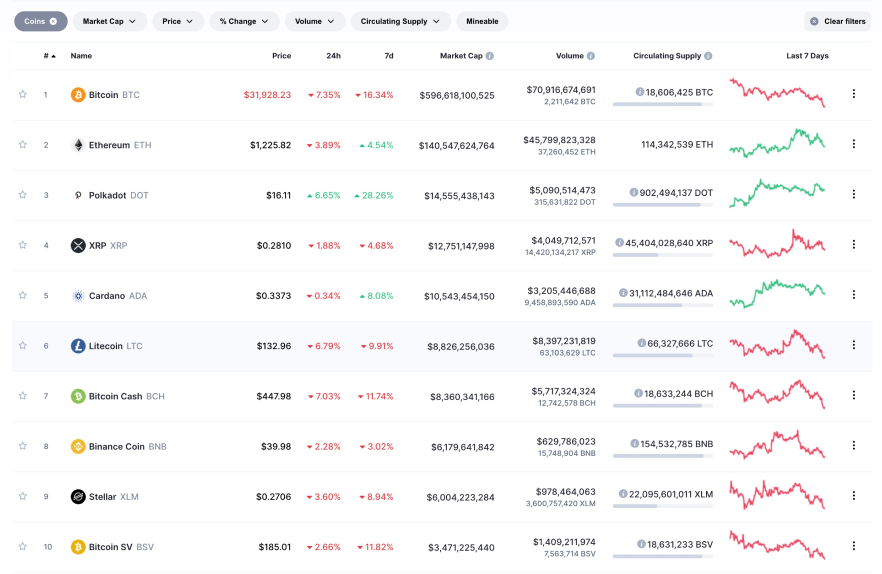
What is a practical Coin marketcap workflow for research?
Coin marketcap research works best as a repeatable workflow rather than a quick glance at rank. First, identify the correct asset, ticker, and network. Second, compare market cap, FDV, supply, and volume. Third, open the official project resources and confirm that contract addresses and supply descriptions match what the dashboard shows. Fourth, inspect exchange liquidity and price consistency. Fifth, read recent project updates and independent risk commentary.
Coin marketcap users should write down assumptions when comparing assets. For example, one token may depend on transaction fees, another on lending demand, and another on a gaming ecosystem that has not yet launched. Their market caps may be similar, but the risks are not. A ranking can place them near each other, while the business model, governance structure, regulatory exposure, and technical maturity may be completely different.
Coin marketcap should never be treated as personal financial advice. Crypto prices can change quickly, and data can lag during volatile periods. Before making financial decisions, users should check official sources, understand the asset's mechanics, consider whether they can afford the risk, and seek qualified professional guidance when needed. The better use of Coin marketcap is not prediction; it is context.
Why Coin marketcap remains useful when used carefully
Coin marketcap remains useful because crypto markets contain thousands of assets, and users need a way to organize them. Ranking by market capitalization is imperfect, but it is more informative than price alone. When combined with supply analysis, liquidity checks, on-chain verification, and project research, it helps users move from curiosity to a more structured understanding of the market.
Coin marketcap also encourages better vocabulary. Users learn the difference between circulating supply, total supply, maximum supply, FDV, trading volume, liquidity, exchange pairs, and token contracts. These terms make it easier to evaluate claims and spot weak comparisons. A person who understands market cap is less likely to assume that a token is undervalued simply because its unit price looks low.
Coin marketcap is best viewed as the opening page of a research process. It can show where an asset stands, how it has traded, and what data points deserve attention. It cannot guarantee safety, future performance, listing quality, or project honesty. Used with skepticism and verification, Coin marketcap gives readers a practical map of the crypto market without replacing their own judgment.
Questions and Answers
What does Coin marketcap mean in crypto?
Coin marketcap usually means the market capitalization of a cryptocurrency, calculated by multiplying current price by circulating supply. It is also used casually to describe crypto ranking pages that organize prices, supply, trading volume, exchanges, and asset profiles. The number is useful for comparison, but it is not the same as cash available to holders or a guarantee of value.
Why is Coin marketcap more useful than token price alone?
Coin marketcap adds supply context to price. A token with a very low unit price may still have a large valuation if billions or trillions of tokens exist. A coin with a high unit price may have a smaller supply. Market cap helps users compare assets by estimated total market value rather than by the price of one token.
How accurate are Coin marketcap rankings?
Coin marketcap rankings depend on price feeds, exchange data, circulating supply figures, and the methodology used by the data provider. They are helpful, but they can be affected by low liquidity, delayed updates, suspicious volume, or incorrect supply reporting. Users should verify important details with official project sources, block explorers, and reputable trading venues.
What is the difference between market cap and fully diluted valuation?
Market cap generally uses circulating supply, while fully diluted valuation uses total or maximum possible supply. FDV can be much higher when many tokens are locked or scheduled to unlock later. Comparing both figures helps users understand whether future supply could change the asset's valuation picture or create additional market pressure.
Can Coin marketcap data tell me what crypto to buy?
No. Coin marketcap data can help organize research, compare assets, and identify questions about supply, liquidity, and valuation, but it should not be treated as financial advice. Crypto assets are volatile and can lose value quickly. Users should verify details with official sources and consider personal risk tolerance before making financial decisions.
What should I check before trusting a new token ranking?
Before relying on a new token's ranking, check the official contract address, circulating supply, total supply, trading volume, exchange liquidity, ownership concentration, documentation, and project communications. New listings can be volatile and may have limited history. A visible ranking does not prove that a token is safe, audited, liquid, or legitimate.
How do exchanges and block explorers fit into Coin marketcap research?
Exchanges show where an asset trades, available pairs, order books, and execution prices. Block explorers show on-chain transactions, contract details, token holders, and supply movements. Coin marketcap style pages summarize market data, but exchanges and explorers help verify whether the numbers are supported by real trading activity and on-chain records.